Good Neighbours 2 Report | Chapter – 7 Flood of Co-operation: Tech, talk, and togetherness to safeguard South Asia
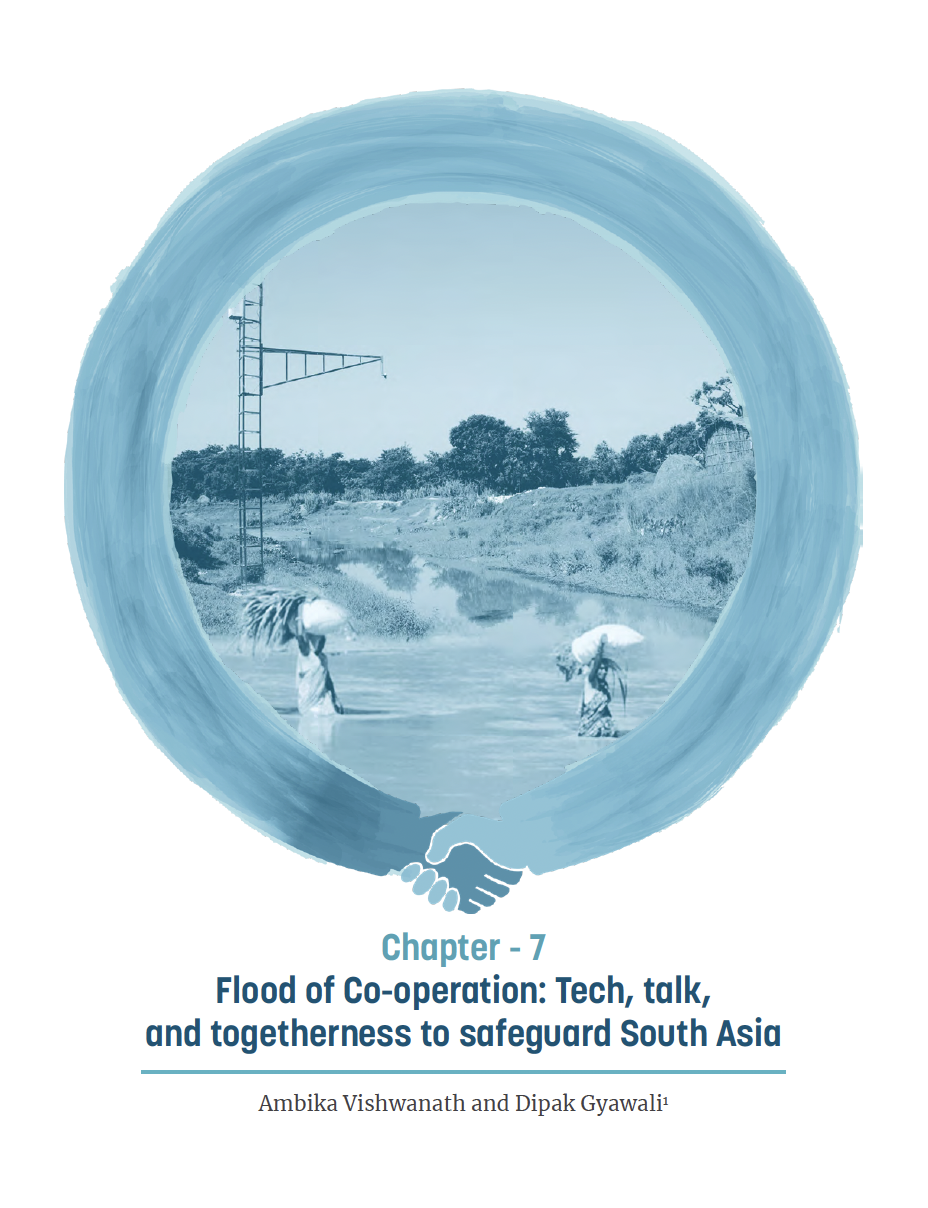
Flood of Co‑operation: Tech, Talk, and Togetherness to Safeguard South Asia
This chapter, authored by Ambika Vishwanath and Dipak Gyawali as part of the World Bank South Asia’s Good Neighbours 02: Connecting for an empowered South Asia, examines how technology, community-driven approaches, and regional collaboration can strengthen flood resilience across South Asia. Floods remain one of the most frequent and devastating natural hazards in South Asia, causing extensive loss of life, displacement, and economic damage each year. While national responses have improved, the transboundary nature of river basins in South Asia and the speed at which flood events unfold demand a shift from fragmented, country-specific, state-led strategies to regional and cooperative and community-oriented solutions.
The chapter underscores that effective flood management in South Asia requires more than infrastructure, it depends on trust, information flow, and coordinated action across borders. By combining formal institutional frameworks with community-based initiatives and regional technology platforms, countries can reduce disaster risk while building climate security.
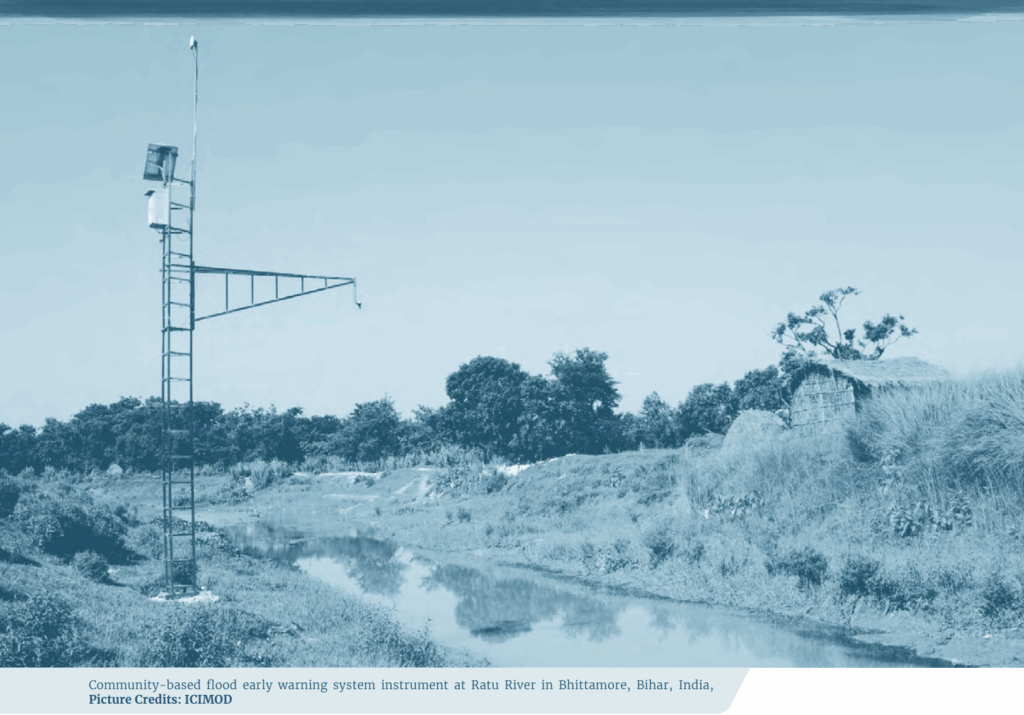
- Locally led early warning systems have played a vital role in safeguarding vulnerable populations, with over 60,000 lives protected along the Ratu River (Nepal-India border) through timely alerts issued by community-run mechanisms through the Community Based Flood Early Warning Systems (CBFEWS).
- Cross-border collaboration through informal channels between Bhutan and India border using mobile messaging and social media platforms has proven effective in delivering rapid flood warnings, especially where formal diplomatic channels are slow to respond.
- Regional forecasting and data systems, including the South Asia Flash Flood Guidance System, offer enhanced capabilities for sharing meteorological information and coordinating emergency response across national boundaries.
- Smaller rivers and unregulated catchments, often overlooked in formal water-sharing agreements, have benefited from locally driven initiatives that combine community engagement with accessible technology, helping to close existing governance and policy gaps.
This chapter to the World Bank’s Good Neighbours series offers a clear roadmap for moving from isolated national responses to a collaborative, technology-enabled regional approach for flood risk management. Strengthening transboundary flood resilience in South Asia requires improved real-time data sharing, greater investment in community-led disaster risk reduction, and more flexible, multi-level governance for timely cross-border coordination. Embedding climate security and regional solidarity in preparedness and adaptation efforts is essential to build long-term resilience.
This report was originally published by The World Bank in July 2025.