


Areas of Engagement

Connecting people and expertise

Inform the conversation

Find convergences

Offer strategic advice to navigate the future

Communicate and engage diverse stakeholders

Serve as knowledge partners

Build strong networks that enable growth


Research
Read More
 Centering India in Global Futures
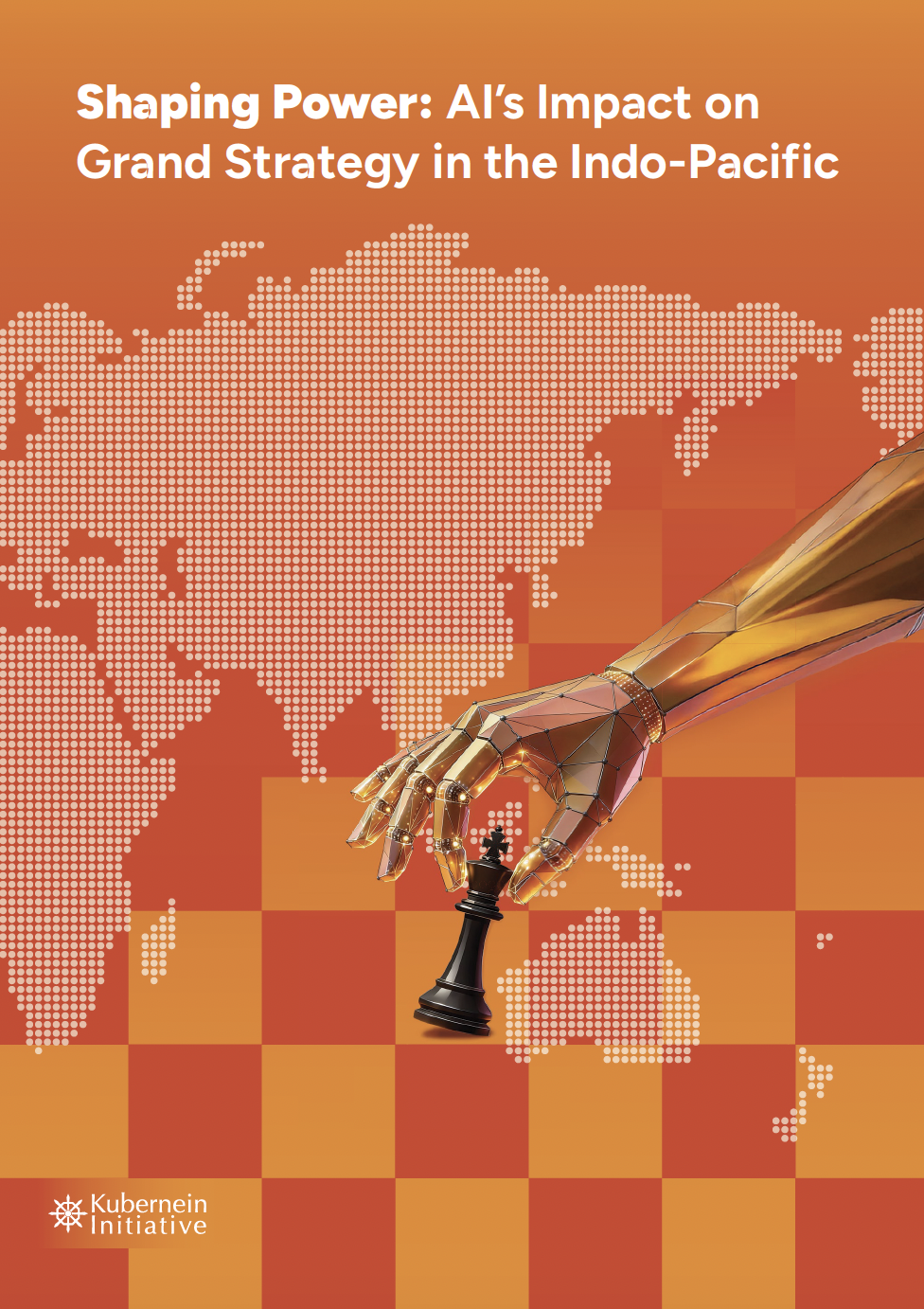
Grand Strategy has traditionally been the domain of “great powers”, as historically influencing the global system was seen as a task only a few states were capable of undertaking. However, in today’s interconnected world, the smallest of responses to emerging global challenges from any country could have global repercussions.
In this report, within the framings of Grand Strategy, we look at potential reaction to global upheavals from emerging AI technology in the Indo-Pacific. We analyse convergences and divergences between the private sector that holds the reins for the development of the technology, vis a vis the government that controls the freedom to deploy.
The grand strategy framings presented in this report help better understand the nuances of the trends when AI is added to risk scenarios that force strategic thinking and a shift in policy. The framings presented in this report will contribute to a deeper understanding of the diverse countries within the Indo-Pacific region and their approaches to AI, to prepare for current and future risks. Particularly as emerging technology are increasingly considered for solutions to fundamental survival such as food security, economic security, infrastructure development, and disaster mitigation and management.
Report Snapshot:
It is a big report — we know 🙂 It took us a year to put it together. For those who may only have time for the cliff notes version, we present a brief snapshot below.
Defining Grand Strategy
Our framing of grand strategy is based on country specific national priorities/objectives on military, economic, and ideology, using a ends, ways and means framework.
Grand Strategy Framings of Countries:
Recognising the vast and varied geopolitical landscape of the Indo-Pacific and the relatively short duration of this research project, we limited our focus to five countries- India, Indonesia, Republic of Korea (ROK), Japan, and Fiji. The selection of these countries was based on a number of factors including (but not limited to) institutional knowledge, countries that stood out in terms of either adoption or potential for developing further AI related technologies, and those that have historically played pivotal roles in great power competition.
India
- Ideology: India’s current foreign policy is one of issue-based multi-alignment to secure its national interests. The goal is to achieve “Viksit Bharat” (Developed India) by 2047, through economic advancement, long-term political stability, and reforms.
- Military: The strengthening of domestic capabilities and modernisation of the armed forces has been a significant priority.
- Economic: Domestic and international economic policies aim to secure long-term growth, stability, and regional hegemony.
- AI Landscape: AI in India is seen as a tool to provide specific societal solutions, and increase efficiencies.
Indonesia
- Ideology: A strategic outlook that combines non-alignment with pragmatic global partnerships and an ambitious ‘Indonesia Emas’ (Golden Indonesia) 2045 Vision of becoming a sovereign, advanced maritime and economic power by 2045.
- Military: Focus on building a sovereign, developed and independent maritime state. Developing the domestic defense industry, and defense acquisitions given its critical location between two oceans and two countries.
- Economic: As one of the worst affected countries in the 1997 Asian financialcrisis, restructuring to stabilise the economy has been a long term priority.
- AI Landscape: Indonesia is seeing growing AI adoption, which is significantly driven by the country’s growing youth population.
Republic of Korea (ROK)
- Ideology: Democratic values and the strengthening of its democratic system have been a key focus for leaders over the years; given its years of occupation and subsequent military rule.
- Military: Strengthening its military capacities while forging strategic alliances to maintain regional stability and deter potential conflicts.
- Economic: Experienced strong economic growth and joined the OECD’sDevelopment Assistance Committee (DAC) in 2020. A key challenge to the ROK economy has been identified as the low birth rate, where technology is seen as a potential bridge.
- AI Landscape: AI was identified as a crucial driver towards the country’s digital and economic growth, and the government remains committed to establishing ROK as one of the world’s top three AI powers.
Japan
- Ideology: Global developments and geopolitical shifts within the Indo-Pacific region have resulted in adjustments to Japan’s pacifist approach. Yet at the same time, the revised Free and Open Indo-Pacific (FOIP) includes emerging challenges, relating to the environment, climate change, global health and emerging technologies.
- Military: Japan believes diplomacy is to be the first line of action in the face of aggression. In 2022, however, military policy in Japan saw a major overhaul in response to the changing world order.
- Economic: Japan has prioritised economic security as a core pillar of its national strategy. Declining birth rates and labour force, alongside an aging population are a significant concern.
- AI Landscape: Japan’s declining work force and labour shortages have made automation a key focus, where the integration of artificial intelligence holds great promise.
Fiji
-
- Ideology: Modern day Fiji is a leader within the South Pacific and has, as its highest strategic priority, contributing to upholding peace and maintaining a stable Indo-Pacific region.
- Military: Fiji’s military strategy is evolving to address contemporary security challenges through an approach that integrates its commitment to regional stability, national reforms, regional partnerships, and international alliances.
- Economic: The Fiji National Development Plan (NDP) 2025-2029 and Vision 2050, aim to utilise and revitalise the country’s natural resources, alongside building sustainable partnerships with other countries, diversifying the Fijian economy and building macroeconomic stability.
- AI Landscape: Artificial intelligence integration is at a nascent stage in the Pacific Island states. Fiji is now taking steps to integrate it within the public and private sector.
Placing AI within Grand Strategy
Emerging technology, and within that AI, is seen as critical to achieving progress and development within the Indo-Pacific region. Any new technology however comes with its own risks that are at times hard to foretell. The private sector focus on economic gains vis a vis the public sector focus on societal gains may limit trust and scope for collaboration. However, as dependence on digital systems grows, collaboration towards risk mitigations seems inevitable. Perspectives on risks and opportunities towards AI are a mixed bag: both sides at times converge on certain issues, and at times prioritise similar concerns in a divergent manner.
For example, a government is concerned with the ability of AI technology to create volume, velocity and variety in the spread of misinformation/disinformation, and will demand transparency and accountability. However, technologists, draw attention to the challenges of tracing accountability, with increasing integration of AI into technology that relies on open-source AI systems. Similarly, opinions differ on the efficacy of human oversight in risk mitigation from AI dependence. The safeguard of having humans in the loop may be nullified with the increasing reliance on AI systems for decision making. In this report we draw out such trends between government and technologist thinking for each of the five countries under study.
It is a delicate balance for countries to enable technology driven economic growth, while ensuring adequate guardrails to prevent misuse and context specific adoption. Any cooperation on AI however is incomplete without the involvement of the private sector that is driving technology advancement and adoption. Measures such as regulatory sandboxes are seen as a channel to bring researchers, developers and policy makers to test legal frameworks and whether they need to be changed.
Research Methodology and Process
We conducted over 60 scenario based interviews, and an in person scenario based exercise, that was backed by rigorous secondary research to draw out the Grand Strategy wireframes presented in this report. The Indo- Pacific countries we studied include, India, Indonesia, Japan, Republic of Korea and Fiji. Within these framings we assess reactions to emerging Artificial Intelligence (AI) related technology, to see whether approaches will remain the same? Or will their actions differ?